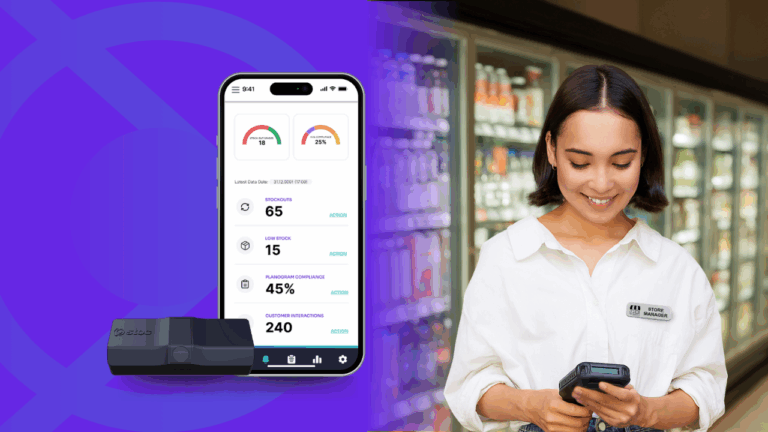
Retail Shelf Intelligence Platform: The Industry Asked for it. We Built It.
A Retail Shelf Intelligence platform. The industry asked for it, and we built it. Three weeks ago, Stoc started a conversation about a blind spot. A structural gap running through the food and beverage industry that has been quietly costing operators revenue, time, and confidence for years. The data not being captured. The decisions made on incomplete information. The planogram deployed into a black hole with no way to know if it ever worked.
That conversation was not academic. Every problem named in those posts was something Stoc had seen firsthand, heard directly from operators, and spent years trying to solve.
Today we are closing the loop. This is what we built.
We Were Listening
Teams told Stoc they were flying blind between merchandising visits. That they had no way to know what was happening on the shelf in real time. That a stockout could sit undetected for hours while revenue quietly disappeared.
They told Stoc they were making planogram decisions on lagging sales data that could not tell the difference between a product with low demand and a product that was never available long enough to sell.
They told Stoc they wanted a source of truth. One place that showed how their network was performing, what needed to change, and what those changes were worth. They did not want more data. They wanted someone to make sense of it for them.
Every one of those conversations shaped what Stoc built. This retail shelf intelligence platform did not start with a feature list. It started with the problems teams told us they could not solve.
From Data to Decisions
Most tools in this space collect data and surface it. Dashboards full of numbers presented to operators who are not data analysts, do not have time to be, and never asked to be. The insight buried somewhere in the export. The action left entirely to the person staring at the screen.
Stoc built something different.
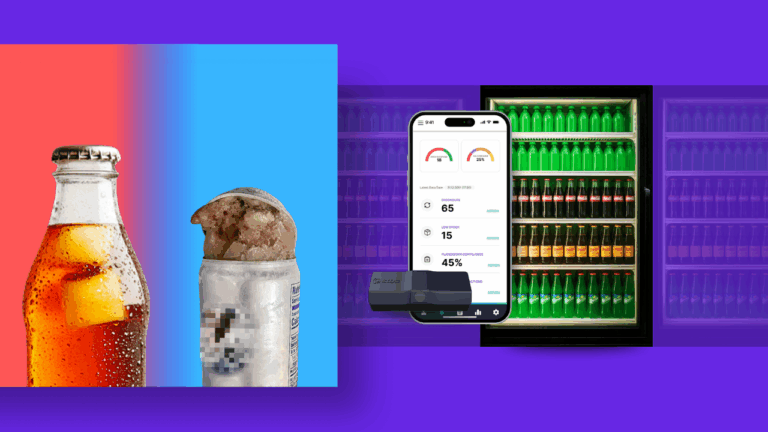
The new platform does not just show data. It reads it, interprets it, and tells operators what to do next. It combines shelf-level compliance data, sales velocity, stockout history, and missing facings into a complete picture and then surfaces the most important thing to act on right now, in plain language, with a recommended action already attached. This is what it means to have a retail shelf intelligence platform rather than a data dashboard.
The difference is not cosmetic. It is the difference between information and insight. Between a report and a recommendation. Between knowing something is wrong and knowing what to do about it. Stoc is not just capturing shelf data. It is doing the analyst work for you.
Built Around the People Using It
One of the consistent things Stoc has heard across every part of the food and beverage chain is that everyone wants to know the same thing: what is actually happening on the shelf.
A distributor wants to know which coolers need attention before dispatching a driver. A retailer wants to know if their planogram made it from the corporate office to the actual shelf. A category manager wants to know which products are earning their space and which ones are quietly underperforming. An executive wants to know how the network is performing across every location and where the biggest opportunities are sitting untouched.
Different roles. Different decisions. The same fundamental question.
The new Stoc platform is built around all of them. The view changes depending on who is looking. The data is the same. The lens is not. A distributor sees routing signals. A category manager sees planogram performance and recommendations. A floor operator sees what needs attention right now. An executive sees the full network picture.
For the first time, everyone across the chain can work from the same platform, pulling exactly the information they need without having to wade through data that was never meant for them. The shelf is the one thing everyone in food and beverage has in common. Stoc is the first retail shelf intelligence platform built around that truth.
The Placement Tool. Nothing Like It Exists.
This is the feature the industry has been asking for without knowing it existed.
The Stoc placement tool is the first of its kind in food and beverage. A dynamic planogram builder that does not start with a blank grid and a Google image search. It starts with the shelf as it actually exists today, the products already in it, the data already being captured, and a demand score on every slot that tells you exactly what is working and what is not.
That demand score is built on three inputs: sales velocity, stockout frequency, and missing facings. Together they tell a story that sales data alone never could. Not just what sold, but what could have sold if the shelf had been set correctly. A product with a high demand score and chronically low facings is an opportunity hiding in plain sight. The placement tool finds it and tells you what to do about it.
Recommendations are generated automatically. Accept one and the planogram updates instantly. The expected revenue impact of every change is visible before publishing. When ready, hit publish. 30 seconds later, anyone on the floor can pull it up on their phone via QR code, see exactly what goes where, and execute it correctly.
No specialist required. No legacy software. No flat PDF emailed to someone who may or may not act on it. Just a drag and drop interface that any operator can use, connected end to end from the data to the decision to the shelf.
Nothing like it exists in this industry. Stoc built it because the food and beverage industry deserved a retail shelf intelligence platform that actually closes the loop.
Seeing What Others Cannot
Every insight this platform surfaces, every demand score, every recommendation, every compliance flag, is only as good as the product recognition powering it. And that is where most systems in this space fall short.
Standard image recognition tools train on front-facing product images. The problem is that products in coolers are rarely perfectly front-faced. A Sprite and a Mountain Dew with their backs to the camera look nearly identical to a model that has only ever seen their front labels.
Stoc trained differently. Every product is captured via a short 360 degree video on a smartphone, broken into hundreds of frames from every angle, then augmented with thousands of synthetic images across different lighting, blur, and perspective conditions. By the time the AI sees a product in a real cooler, it has already seen that product from every angle it could possibly appear.
The result is recognition accuracy that flat image systems cannot match. That accuracy is the foundation everything else is built on.
What Operators Can Now Do That They Could Not Before
The shift this platform creates is not subtle. Here is what it looks like on the ground.
Before, an operator walked every cooler on a fixed schedule to find out what was happening. Now they know before they go. Alerts surface issues in real time. Dispatch decisions are driven by signal, not routine.
Before, a planogram decision meant pulling a sales report, running analysis in a separate tool, building the update in a legacy platform, exporting a PDF, and emailing it to the field. Now it means opening the placement tool, reviewing AI-generated recommendations, accepting the ones that make sense, previewing the revenue impact, and publishing. The person on the floor has it in thirty seconds.
Before, a product getting cut from the planogram because its sales numbers looked low might have been a high-velocity item that was chronically out of stock. Nobody knew because the data to see it did not exist. Now that product has a demand score of 90 and a recommendation to double its facings.
Before, the planogram was a document. Now it is a living system.
Stoc is not asking operators to become data analysts. It is doing that work for them, surfacing what matters, recommending what to do, and making execution simple enough that the people closest to the shelf can act on it immediately.
The Numbers Behind the Decision
The financial case for this platform builds from the most basic unit of a single product in a single slot.
A product with a meaningful sales velocity, stocked out for several hours during a peak period, generates a real and calculable revenue loss from that one slot. Multiply that across the right products, the right coolers, and a full network of locations. Add the labor savings from eliminated manual audits, optimized merchandising routes, and reduced time spent chasing data across disconnected systems. Factor in the planogram improvements that come from demand-score-driven decisions rather than lagging sales data.
The number that emerges is not incremental. For a large food service operation or convenience retail network running across tens of thousands of points of sale, even modest improvements in stockout rates, planogram compliance, and merchandising efficiency produce results that belong in an annual report.
Research from IHL Group found that out-of-stocks alone account for .2 trillion in lost retail sales globally every year. [1] That number does not shrink on its own. It shrinks when operations have the visibility to act on it.
The operators who will see the biggest returns are the ones who treat this platform as a starting point for action, not a reporting tool to review once a week. The data is only as valuable as what gets done with it.
This Does Not Replace Anyone
When AI enters an industry, the first question is always about jobs. Stoc has a direct answer.
This platform is additive. It does not automate work that people are currently doing well. It eliminates work that people should never have had to do in the first place.
Nobody should be spending four hours a day manually walking coolers to find out what is in them. Nobody should be taking photos of shelves and texting them to managers as a system of record. Nobody should be running planogram analysis across five disconnected tools and hoping the export is still current by the time it reaches the field.
Those are not jobs the platform is replacing. They are inefficiencies it is removing. The time given back gets redirected to decisions that actually require human judgment, the negotiations, the strategy, the relationships, the work that no dashboard will ever be able to do.
The people who will feel the impact of this platform most are not the ones who will lose something. They are the ones who will finally have what they needed to do their jobs well. That is not disruption. That is long overdue.
The Wait Is Over
The food and beverage industry has been asking for this for a long time. Not always in those words. But in every conversation about wanting a source of truth, in every operator who said they wished they did not have to think about their coolers anymore, in every category manager staring at a sales report trying to figure out what to cut, the ask has been the same.
Give us something that actually closes the loop.
Stoc has spent years inside this industry, across food service operations, distribution networks, and convenience retail, earning the right to build this. Not just observing the problems but understanding them well enough to know exactly what a solution needed to do.
The new Stoc platform is live. It is the retail shelf intelligence platform this industry has been waiting for. And it is just the beginning.
If you are ready to see what your shelf is actually doing, Stoc is ready to show you.
Sources
[1] Chain Store Age, Global Retail Losses Due to Inventory Distortion Hit $1.77 Trillion: https://chainstoreage.com/study-global-retail-losses-due-inventory-distortion-hit-177-trillion