
How a Healthcare Foodservice Provider Recovered Lost Beverage Sales With Real-Time Shelf Intelligence
When Availability Slips and No One Sees It
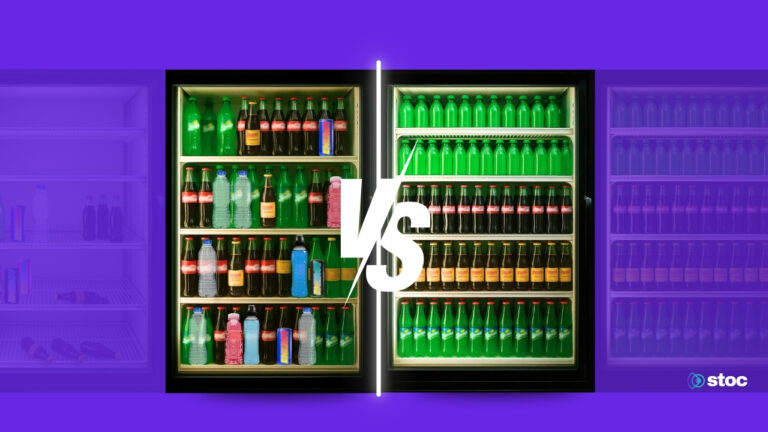
A healthcare foodservice provider needed a reliable way to understand why beverage sales were underperforming and why coolers looked inconsistent throughout the day. Core beverage availability hovered near 68%. Some shelves sat empty for hours with no way for teams to know. Vendors restocked coolers on fixed schedules without visibility into current conditions.
Empty shelves created guest experience issues and steady revenue loss. The team needed a way to see what was happening on the shelf in real-time so they could protect revenue and rebuild consistency.
Turning Guesswork Into Daily Visibility
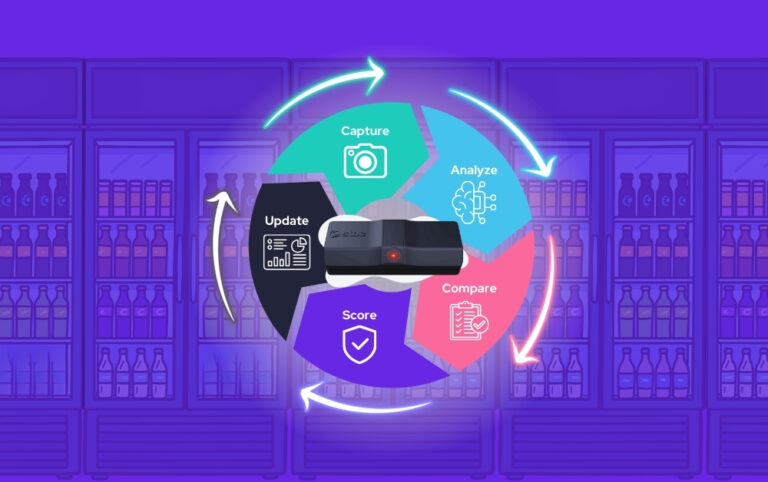
Stoc deployed our AI Retail Agent across 19 cooler spaces inside the hospital cafés. Swing door coolers were fully automated, capturing images triggered by door openings. Sliding door and open-air coolers used Stoc Management Mobile to ensure consistent data.
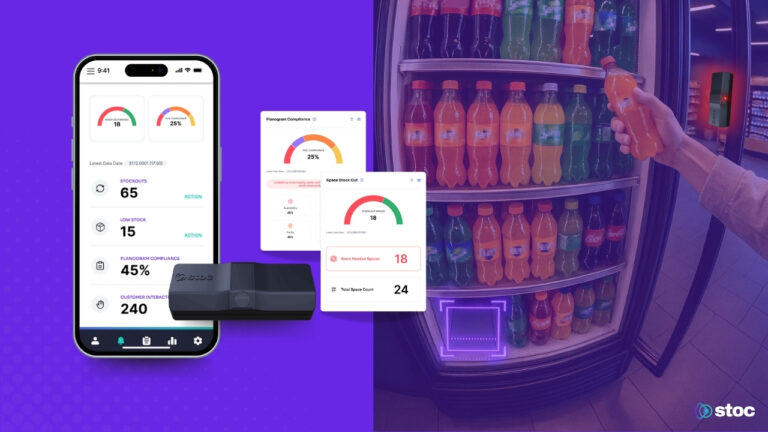
The system analyzed product presence, facings, availability, and slot accuracy to highlight issues as they occurred. Alerts reached the Stoc dashboard and mobile app so operators could take action quickly.
Stoc also redesigned all 19 planograms using internal café sales, external industry data, and guest demand trends. This reset gave the team a clean, correct structure for their coolers and created the foundation for improved availability.
What Happens When You Finally See the Shelf
Once visibility turned on, the café saw how much availability gaps were costing.
During the pilot, Stoc detected 270 stockouts across automated coolers. Each one lasted an average of 6.1 hours. Across the dataset, this was equal to roughly 2.7 hours of missed availability per cooler per day.
Four cooler spaces produced 90% of stockouts. Ten Coca-Cola SKUs were responsible for 67% of the issues. Most alerts fired during hours when managers were not onsite, allowing stockouts to carry from the afternoon into the next morning.
For the first time, the café had a complete picture of where availability was breaking down and why.
Stockouts Fell. Availability Surged. Revenue Followed.
Once operators began responding to alerts and correcting issues during the day, availability improved quickly.
Core beverage availability rose from 68% to 98%. On-shelf availability increased from 77% to 97% and held between 97% and 100% for four consecutive weeks.
Planogram execution stabilized above 95% across facings, slot accuracy, and purity. Coolers became easier to maintain and required fewer corrective resets.
Visibility shifted the cooler from a daily guessing game to a predictable part of operations. Teams were able to act before issues escalated.
The Café Was Leaving Revenue on the Shelf. Not Anymore.
Improved availability translated directly into sales performance.
The café realized a 2.08% lift in like-for-like beverage sales, worth roughly $2,877 per month. Stoc identified an additional 2.72% upside from preventable stockouts, worth approximately $3,765 per month.
Combined, the opportunity reached %6,642 per month per store, delivering a 32x ROI.
Visibility uncovered a silent revenue drain and provided a roadmap to reclaim it.
Why Visibility Matters in Healthcare Retail
Hospital cafés serve a wide range of guests. Staff, patients, and visitors rely on these spaces for convenience, comfort, and consistency. Empty coolers undermine that experience.
Stoc helps healthcare operators:
- Improve daily availability
- Identify predictable stockout patterns
- Understand SKU level drivers of lost sales
- Enhance vendor accountability
- Build merchandising discipline that lasts
Better availability protects revenue and strengthens long-term client relationships.
Scaling Visibility Across the Healthcare System
Following the pilot, the next phase focuses on expanding visibility to additional cafés, integrating sales data with shelf data, and using Stoc insights to redesign planograms with even greater precision.
The provider plans to incorporate Stoc metrics into supplier scorecards and use real-time availability data to protect contract performance. The goal is to create consistent, predictable merchandising standards across the entire healthcare system.