Stadium Fan Experience Optimization Inside a Tier-1 Sports and Entertainment Venue
Stoc Brief
- Stoc launched inside a Tier-1 sports and entertainment venue to understand how stadium food and beverage operations perform during live events.
- What we observed was not a lack of effort, but a lack of visibility into concession operations, planogram compliance, and beverage availability.
- By measuring execution during events, we uncovered where small, achievable changes can compound into meaningful improvements in fan experience and beverage sales.
Why We Entered Sports and Entertainment
Stadium fan experience optimization starts with understanding reality.
Sports and entertainment venues operate under extreme conditions. Demand is concentrated into short time windows. Labor is limited. Infrastructure is fixed. Contracts and sponsorships restrict flexibility.
At the same time, expectations continue to rise. Fans expect fast service, product availability, and consistency whether they are attending a professional football game, a soccer match, or a sold-out concert.
When Stoc entered the sports and entertainment sector, our goal was not to redesign how venues operate. It was to understand how stadium food and beverage operations actually perform during live events.
Go in. Measure reality. Learn from it.
What We Saw Inside Stadium Food and Beverage Operations
From the outside, the venue appeared well run.
Custom planograms were in place.
Experienced operators were on site.
Established concession workflows existed.
Once we launched inside a full in-venue market, a different picture emerged.
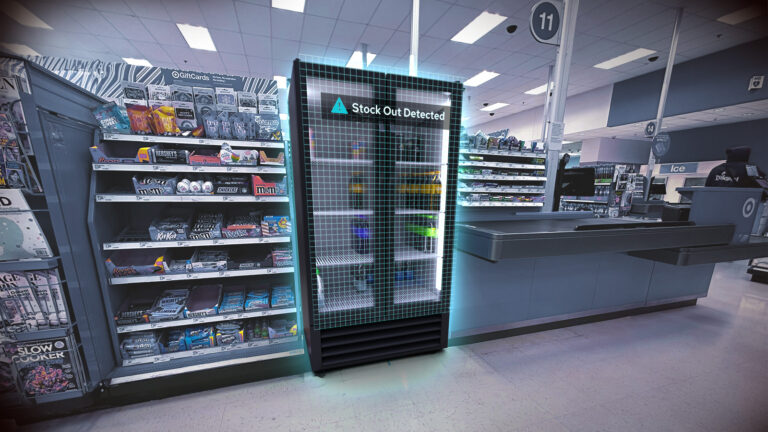
The rollout covered 13 cooler doors across live sporting events and concerts. This was not a theoretical model or a limited snapshot. This was real execution, under real pressure, across real events.
Performance varied widely.
Some coolers sold out quickly.
Others underperformed, sometimes only a few feet away.
Availability differed by location, door, and product.
This inconsistency was not caused by lack of effort. It was caused by limited visibility into how execution actually unfolded during events.
The Reality of Stadium Concession Operations on Event Day
Stadium concession operations are not static environments.
Operators are expected to:
- Follow planograms using printed guides
- Make rapid decisions during peak demand
- Balance speed, safety, and guest experience
- Operate within fixed layouts and staffing models
Sales data exists, but it arrives after the event and at too high a level to explain execution in the moment.
Sales data answers what sold.
It does not explain why some concession stands run out of drinks while others do not.
That gap is where fan experience breaks down.
When Measurement Changed the Conversation
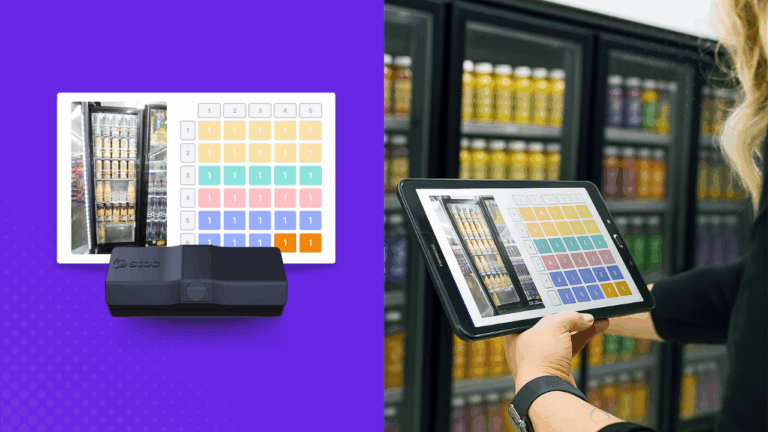
Once cooler-level measurement was live, patterns became visible.
We observed:
- Doors within the same market performing dramatically differently
- Certain SKUs consistently driving concession stand stockouts
- Execution gaps that only appeared during peak demand
One example stood out clearly.
Two adjacent coolers, serving the same crowd during the same event, produced very different results. One sold through rapidly. The other lagged behind.
The issue was not demand.
It was misalignment between planogram strategy, execution, and real customer behavior.
What the Numbers Made Impossible to Ignore
As measurement continued across events, the data told a clear story.
Planogram compliance in stadiums reached the mid to high 80 percent range once visibility was introduced. On paper, that appeared strong. In practice, it still masked meaningful performance gaps at the door and SKU level.
Concession stand stockouts were not rare events.
They occurred multiple times per market per event.
Observed patterns showed that lost beverage availability translated into hundreds of dollars in lost revenue per market per event. Annualized, this represented tens of thousands of dollars in recoverable revenue without adding labor or infrastructure.
These losses were quiet. They compounded over time.
The Constraints Stadium Operators Work Within
Even when issues become visible, stadium operators cannot change everything.
Sports venue food and beverage management operates within real constraints:
- Vendor and sponsorship agreements
- Fixed cooler placements
- Pre-purchased inventory
- Event-specific labor limitations
Large-scale changes are often not possible during the season.
That does not mean improvement is off the table.
It means improvement must come from the areas where flexibility exists.
Where Planogram Compliance and Small Changes Matter Most
One of the most important lessons from this launch was that meaningful improvement does not require sweeping change.
It requires precision.
Even within fixed contracts and layouts, there are variables operators can influence:
- How facings are allocated within a cooler
- Which doors prioritize high-velocity beverages
- How replenishment aligns with peak demand windows
- How teams prepare high-risk locations before gates open
These are micro changes.
At stadium scale, micro changes create macro impact.
Stoc enables teams to see those gaps clearly and say, “We cannot change this, but we can absolutely change that.”
That clarity is what makes stadium beverage sales optimization possible during the season.
From Annual Resets to Continuous Improvement
Traditionally, stadiums improve through annual cycles.
Plan during the off-season.
Execute during the season.
Review after the season.
What we observed is that this model limits progress.
When teams can measure execution during events, learning accelerates. Adjustments can be tested, observed, and refined between events.
Stadium fan experience optimization does not have to wait for next year.
What This Taught Us About Stadium Fan Experience Optimization
After spending time inside this environment, several truths became clear.
Execution challenges follow patterns.
Fan experience suffers most in moments teams cannot see.
Revenue is lost quietly, not dramatically.
Operators want to improve but need evidence to do so.
The biggest unlock is not more effort.
It is visibility.
Where We Believe Sports and Entertainment Goes Next
Based on what we observed, sports and entertainment venues benefit most from tools that:
- Make execution visible during live events
- Highlight where planogram compliance breaks down
- Surface realistic opportunities for improvement
- Support continuous learning across events
This launch was not an end state.
It was the beginning of understanding how better fan experience and stronger beverage performance are built one event at a time.